
McDonald's was exploring innovative approaches to connect with their target audience. The digital landscape has revolutionised our communication methods, while crowd sourcing has emerged as the latest strategy for creating content and developing products. The main ask was: how do we create a digital buzz through viral elements and position McDonald's as a digital innovator.
OBJECTIVE
Strengthen the emotional connection of the target audience with the McDonald's brand. Engage them with the brand through a co-creation campaign. Achieve a minimum of 10,000 participants and 100,000 votes.
EXECUTION
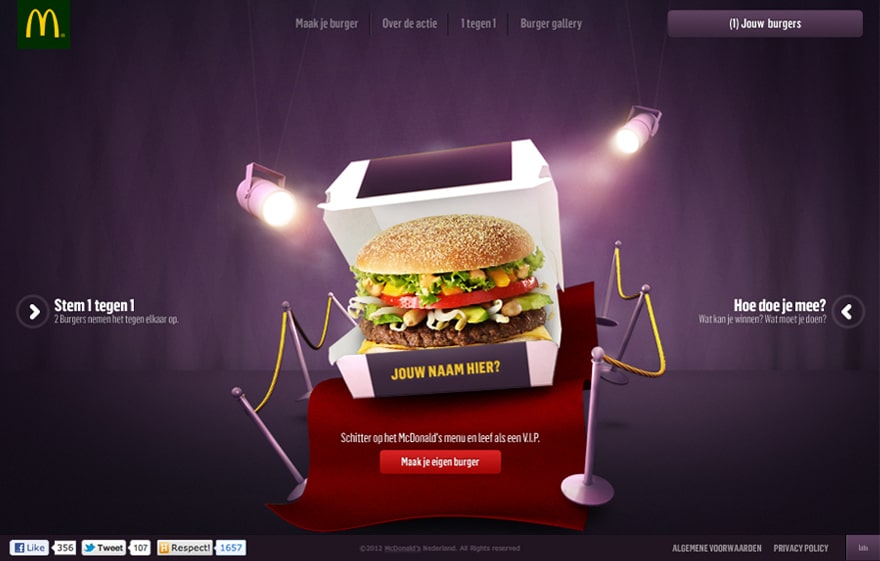
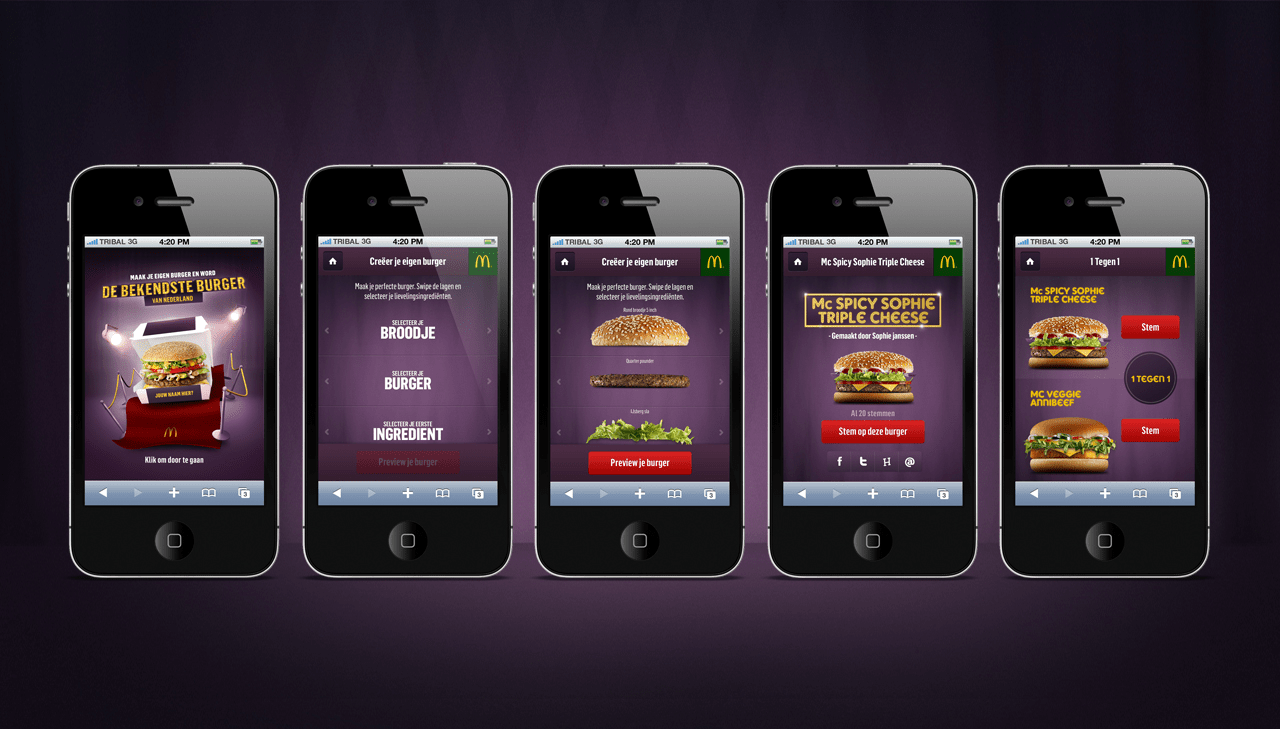
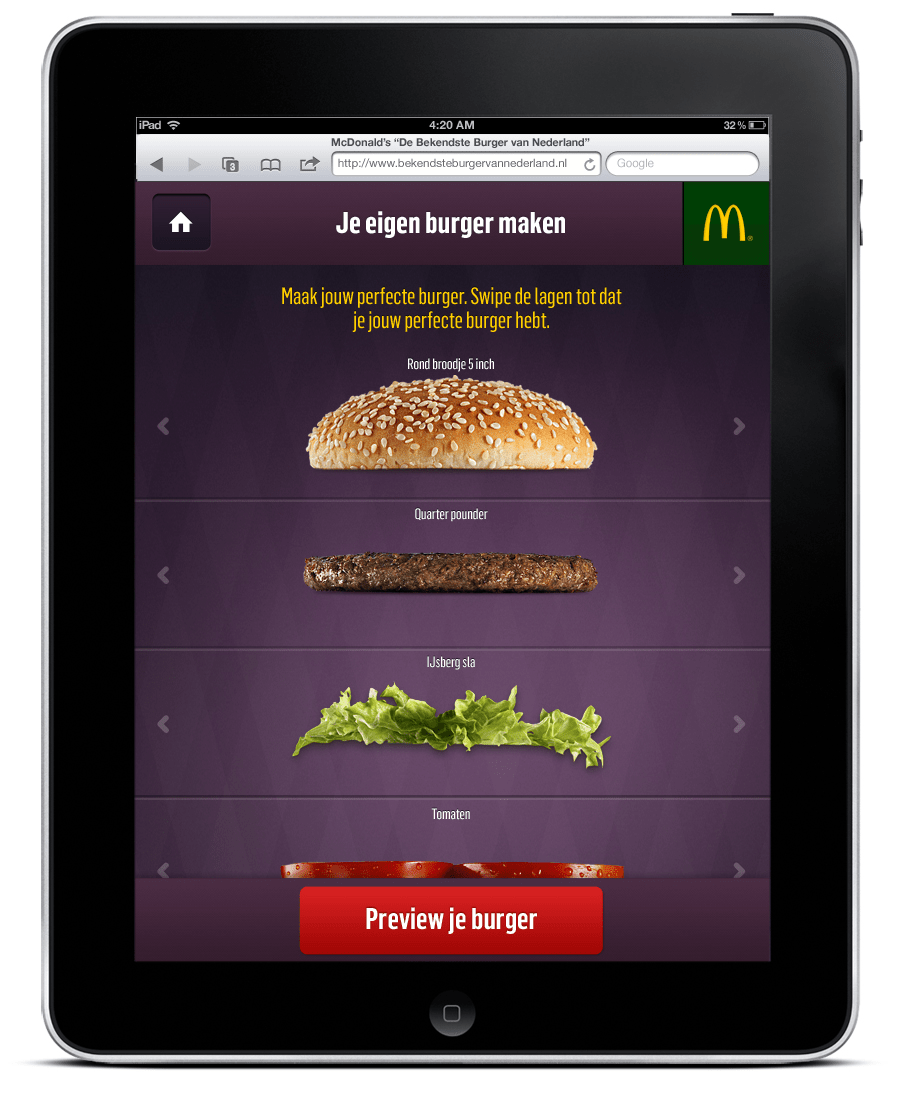
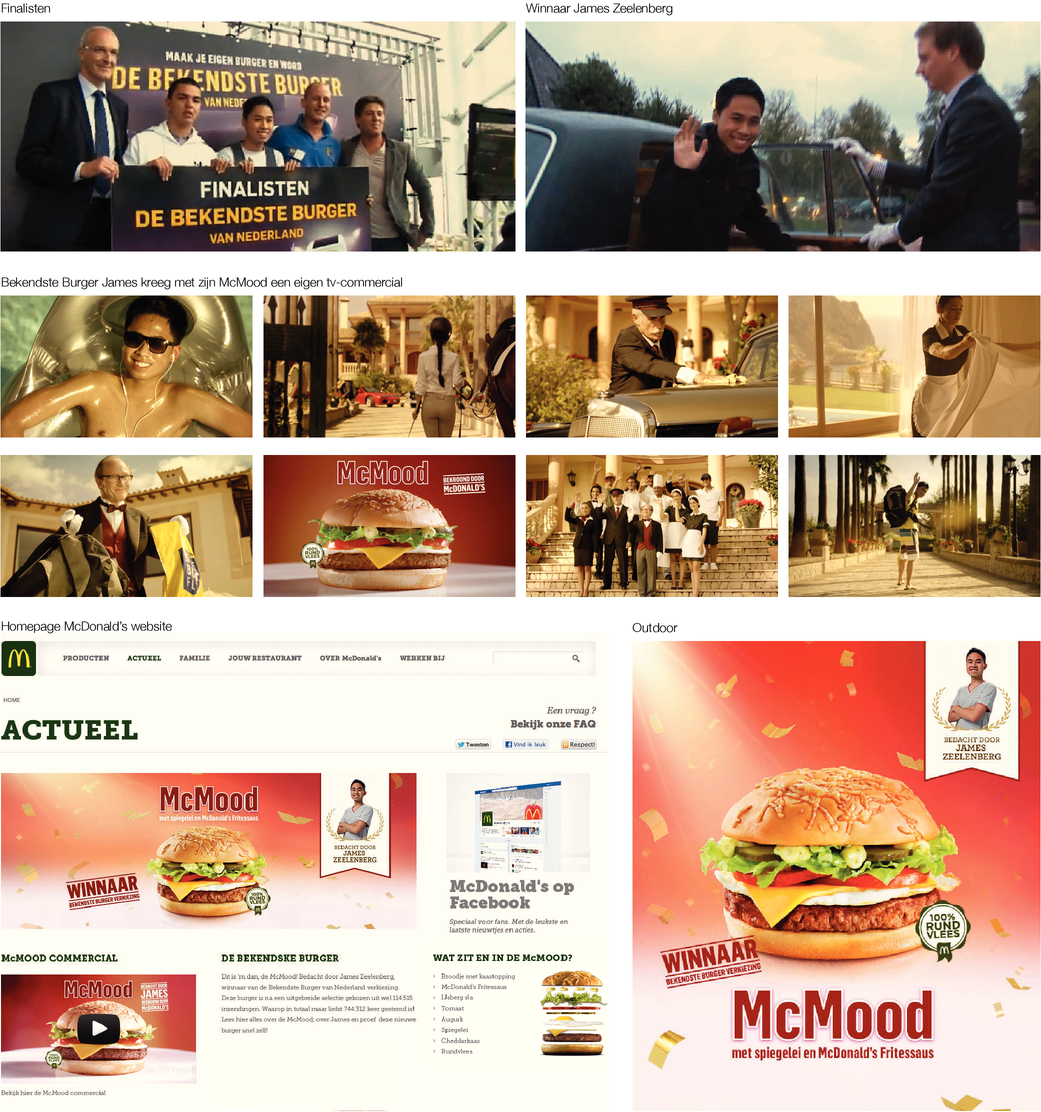
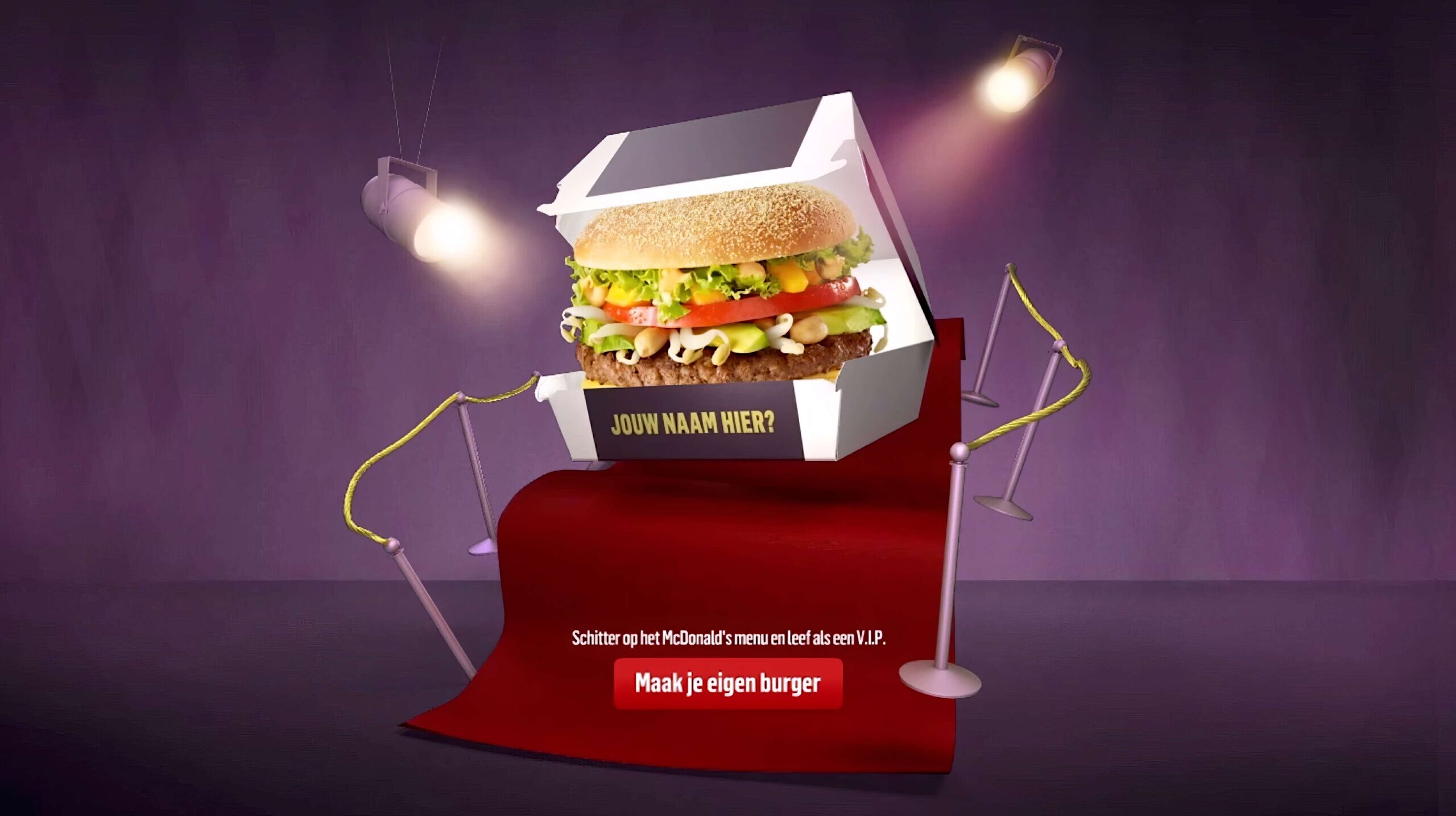
For the first time in Dutch history, fans had an influence on McDonald's biggest icon: the burger. Online, they created their own burger by choosing from 70 ingredients and shared it via social media to gather votes. A jury of experts, including celebrity Martijn Krabbé, selected three finalists from the 10 burgers with the most votes. The ultimate winner, James Zeelenberg with his McMood, enjoyed a week of the Famous Burger status. His burger was featured on the McDonald's menu, he lived in a real villa for a week, and he starred in his own TV commercial and point of purchase (POP) materials. In short, James was the Famous Burger of the Netherlands.
The campaign had five phases: teasing, making the burger, the jury moment, the battle between the finalists, and the winning burger on the menu. Throughout all these phases, the campaign was integrated with digital at the heart of the campaign (action sites, banners, search, social, mobile). This was supported by TVC, tag-ons, POP, outdoor, and PR (both online and offline). The overall result exceeded all objectives: 115,000 participants (more than 10 times the expectation) and 750,000 votes. The Facebook page was the fastest national grower in May 2012, and the number of Facebook fans increased from 2,000 to 35,000 during the co-creation phase (without forcibly asking for likes). All this resulted in commercial success: sales of the McMood were 9% above the target.